The Cleveland Clinic says yes — and so do ASCO guidelines. Here’s what the latest evidence shows, and what it means for patients in Clonee and beyond.
The Cleveland Clinic — one of the world’s leading cancer institutions — published new findings this week confirming that acupuncture may help manage some of the most distressing side effects of cancer treatment. For anyone going through chemotherapy or radiation, or caring for someone who is, this is important reading.
Please note: Acupuncture does not treat or cure cancer. It is a complementary supportive therapy to help manage treatment side effects and improve quality of life alongside conventional oncology care. Always discuss any complementary therapy with your oncologist before starting.
What did the Cleveland Clinic find?
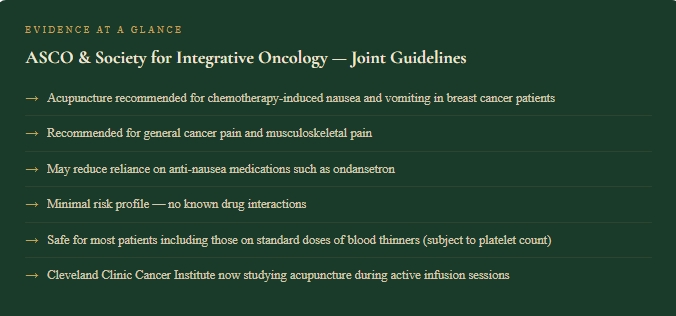
The article, published on 29 May 2026, highlights that the American Society of Clinical Oncology (ASCO) and the Society for Integrative Oncology have issued joint clinical guidelines recommending acupuncture for cancer-related pain, musculoskeletal pain, and chemotherapy-induced nausea and vomiting during and after breast cancer treatment.
This is significant. ASCO is not a fringe organisation. It is the world’s leading professional body for oncologists. When ASCO puts acupuncture in its clinical guidelines, the conversation about whether acupuncture “works” shifts definitively into evidence-based medicine.
How does acupuncture actually work for these symptoms?
Stimulating acupuncture points triggers the release of natural neurochemicals — including endorphins, serotonin, dopamine, acetylcholine and gamma-aminobutyric acid (GABA). Each of these plays a specific role in managing the symptoms cancer patients experience most.
Endorphins reduce pain. Dopamine calms the nervous system. Serotonin supports mood and reduces nausea. The goal, as described by Cleveland Clinic’s licensed acupuncturist, is to get the body to regulate these processes more effectively on its own — reducing dependence on medications over time.
Because acupuncture works systemically across the whole body, a skilled practitioner can address multiple symptoms in a single session — something that makes it uniquely suited to the complex symptom picture that many cancer patients experience.
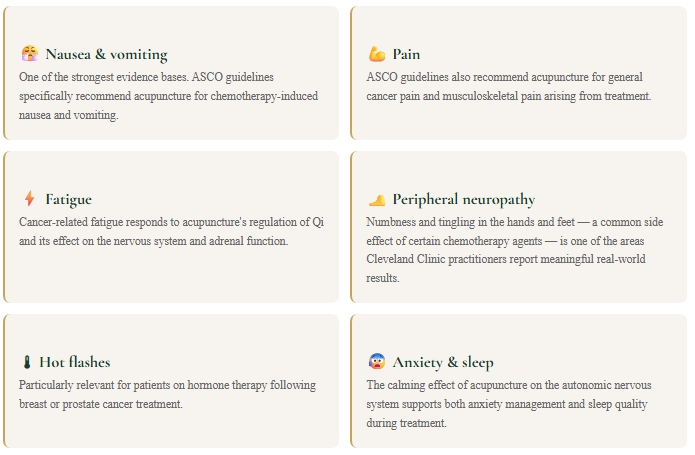
Which side effects may acupuncture support?

When is the right time to start?
The risk profile of acupuncture is very low. There are no known drug interactions with any chemotherapy agent or oncology medication. Very minor side effects — light bruising, slight soreness, occasional lightheadedness — may occur. Most patients on standard doses of blood thinners can receive treatment, depending on their platelet count.
At AcuRodos, we always liaise with your oncology team before beginning treatment, and we welcome GP and consultant referrals via our professional referral portal.
Acupuncture at AcuRodos — what to expect
Your first session is a full assessment. We review your current treatment protocol, medications and side effect profile before designing a plan. Each subsequent session is adapted to where you are in your treatment cycle — and because we are open until 10pm Monday to Friday, appointments fit around chemotherapy schedules, hospital visits and rest periods.
We work alongside your oncology and GP team, not separately from them. Progress notes can be shared with your medical team on request.

Source: Cleveland Clinic Consult QD, “Can Acupuncture Really Help with Cancer Treatment Side Effects?” published 29 May 2026. Available at consultqd.clevelandclinic.org. References: ASCO/Society for Integrative Oncology Joint Guidelines, Journal of Clinical Oncology 2022.
This blog post is for informational purposes only and does not constitute medical advice. Always consult your oncologist before beginning any complementary therapy.
Photo by Angiola Harry on Unsplash