Does a dip in the mercury mean a rise in injury risk? According to recent insights from The Irish Times and the latest consensus in sports medicine, the answer is a resounding yes.
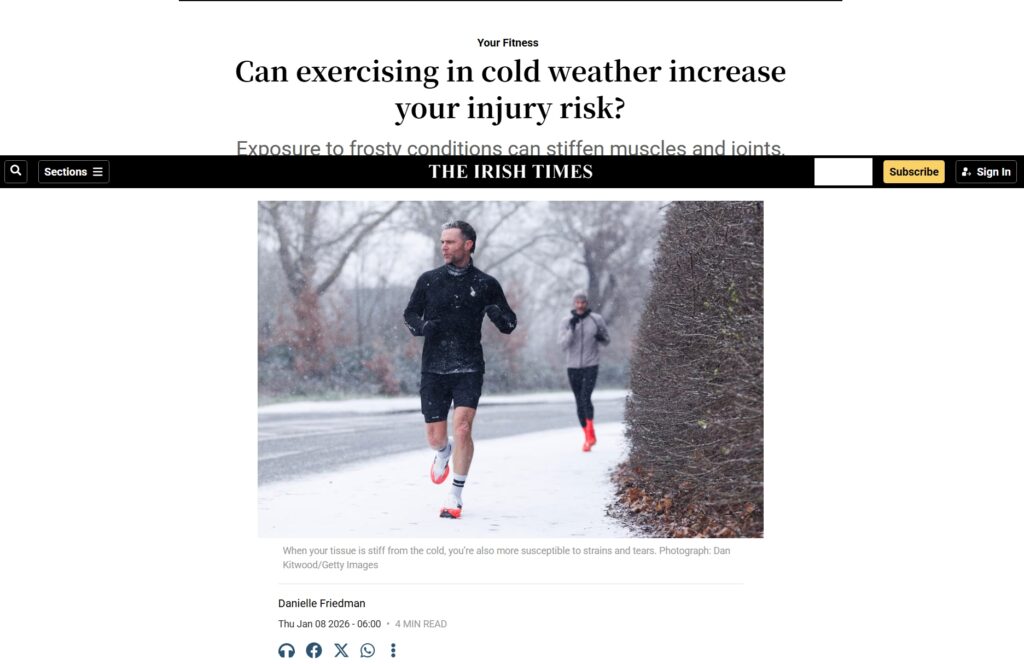
For health professionals and athletes alike, understanding why the cold increases vulnerability is key to effective prevention. By bridging Western physiological data with the anatomical insights found in texts like The Spark in the Machine and The Dao of Chinese Medicine, we can gain a comprehensive view of winter injury mechanics.
1. The Physiological Freeze: Stiff Muscles and Slowed Power
When the body is exposed to cold, it prioritizes core temperature through vasoconstriction—narrowing blood vessels in the extremities to keep the heart and vital organs warm. While lifesaving, this has a direct impact on musculoskeletal performance:
- Reduced Elasticity: As muscle temperature drops below the optimal 37°C, tissues become stiffer and less pliable.
- The Power Drain: For every 1°C drop in muscle temperature, there is a 4–6% decline in force and power production.
- Impaired Coordination: Cold exposure can lead to “unsteady ankles and knees” and a loss of fine motor control, significantly increasing the risk of slips and falls.
2. The Anatomy of “Cold Invasion”: A Chinese Medicine Perspective
In The Dao of Chinese Medicine, Donald Kendall notes that ancient researchers viewed “Cold” as a primary environmental stressor that impairs the flow of blood and vital nutrients.
Dr. Daniel Keown, in The Spark in the Machine, further bridges this by identifying the “meridians” of Traditional Chinese Medicine (TCM) with the fascial planes of Western anatomy.
- Qi Stagnation as Microvascular Stress: In TCM, cold “contracts.” This mirrors the Western observation of microvascular damage and reduced nerve function caused by sustained reductions in blood flow during cold exposure.
- The Triple Burner and Interstitial Fluids: The “Triple Burner” (Sanjiao) relates to the connective tissues and interstitial fluids that bathe our cells. When these fluids “thicken” due to cold, joint lubrication decreases, leading to the stiffness often reported by patients in winter.
3. Clinical Implications: More Than Just a Warm-up
For practitioners, the goal is to help patients maintain the “Protective Qi” (defense) while ensuring the “Nutritive Aspect” (blood flow) reaches the extremities.
Professional Recommendations for Winter Athletes:
- Extended Dynamic Warm-ups: A 15–20 minute gradual warm-up is essential to raise core and muscle temperature before explosive movements.
- Strategic Layering: Use moisture-wicking base layers to prevent “Damp-Cold”—a condition where wet skin leads to rapid heat loss and potential tissue damage like chilblains or non-freezing cold injury.
- Hydration is Non-Negotiable: Cold air is dehydrating, and the “thirst mechanism” is often suppressed in winter. Dehydration leads to premature fatigue and muscle cramping.
Bridging the Gap at Acurodos
At Acurodos, we specialize in integrating Western anatomical science with the functional wisdom of Chinese Medicine. Whether you are a health professional looking to refer a patient for injury rehabilitation or an athlete seeking to optimize winter performance, our clinic focuses on restoring the “Spark” in your movement.
Are you complaining of winter joint stiffness? Contact us at www.acurodos.ie to learn more about our integrative approach to musculoskeletal health.